[ 2025-2026 ]
ElfieResearch
A patient-centric platform for decentralized clinical trials.

[ scroll to discover ]
[ target ]
Designed an end-to-end trial platform across 6 distinct personas, reframing electronic consent from a legal formality into an interactive learning experience — engineered to hit 90% consent completion and 90% participant retention.
- Product Designer
- 2025
- Web console · Mobile app
- 21 CFR Part 11 · HIPAA · GDPR




[ context & stakes ]
Why Patient-Centric Decentralization Matters
Clinical trials are moving out of the clinic, with home-based participation jumping from 20% in 2019 to nearly 80%. However, legacy trial software was built for sites, not participants—treating patients as data points rather than human beings. This leads to poor engagement and high dropout rates, which ultimately invalidate trials.
Crucially, traditional trials fail on diversity: African Americans represent just 5% of US trial participants despite making up 13% of the population. By drastically lowering the burden of participation, modern platforms can both prevent trial failure and ensure broad, equitable representation.
[ constraints ]
Audit trail was a design constraint from day one.
[ what i have to deliver ]
eConsent
End-to-end flows for electronic consent.
ePRO
Electronic patient-reported outcomes (ePRO / eCOA).
Patient Recruitment
Landing page + pre-screening / eligibility flow.
Console
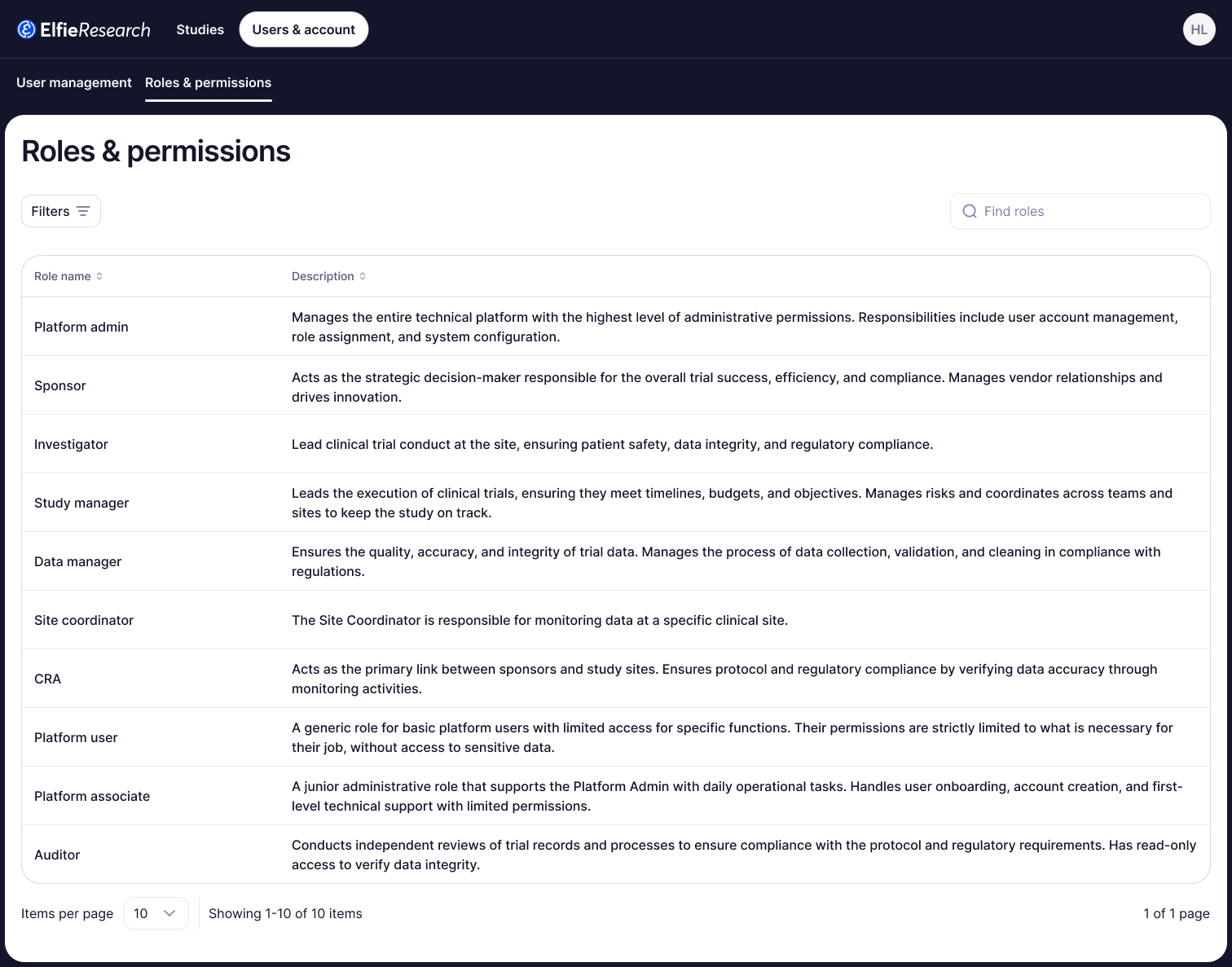
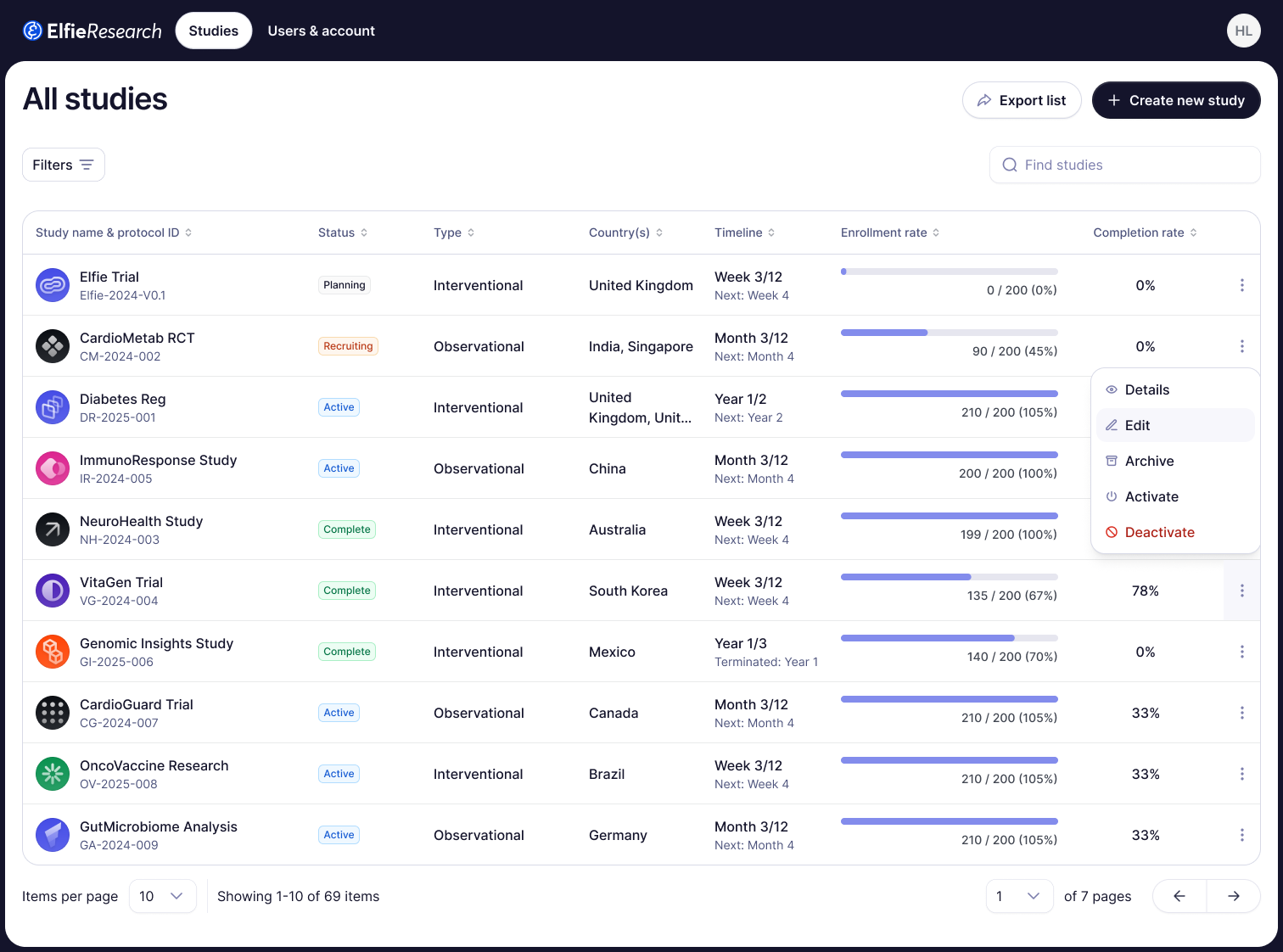
Role-based web console used by trial staff.
[ reframe from insights ]
While most platforms optimize for sponsors, we realized that a great participant experience is what actually drives retention.
This reframed the entire brief. Instead of starting with the admin console, we focused on where trials usually break down: onboarding. That made eConsent the natural starting point—not just as a legal signature to collect, but as an accessible first impression and a crucial comprehension test.
[ key decisions ][ comprehension ]
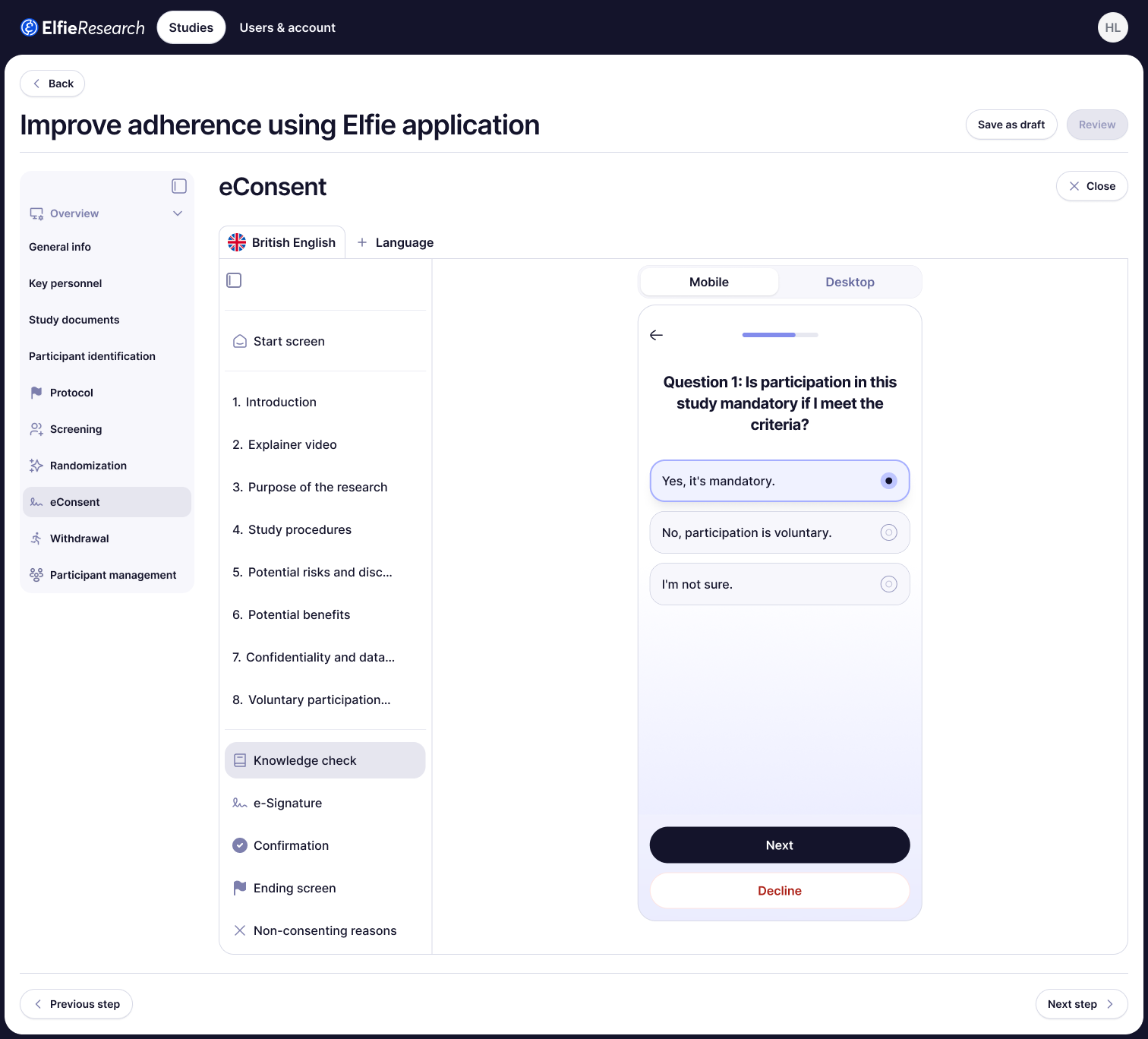
eConsent as interactive e-learning, not a scroll-and-sign PDF.
Problem
Standard consent processes suffer from high drop-off rates and poor participant comprehension.
Lack of trial understanding leads to participant anxiety and premature dropouts.
Options
A. Standard scroll-and-sign PDF B. Explainer video only C. Interactive modular flow with comprehension checks
Chose
Interactive Modular flow with comprehension checks
Rationale
Regulatory alignment: FDA guidance explicitly favors comprehension-oriented consent models. Higher engagement: Interactive elements directly boost completion rates and retention. Reduced anxiety: Structuring consent like an onboarding flow makes complex trial information approachable and manageable for participants.
Target
Achieve a 90% consent completion rate.
[ key decisions ][ system ]
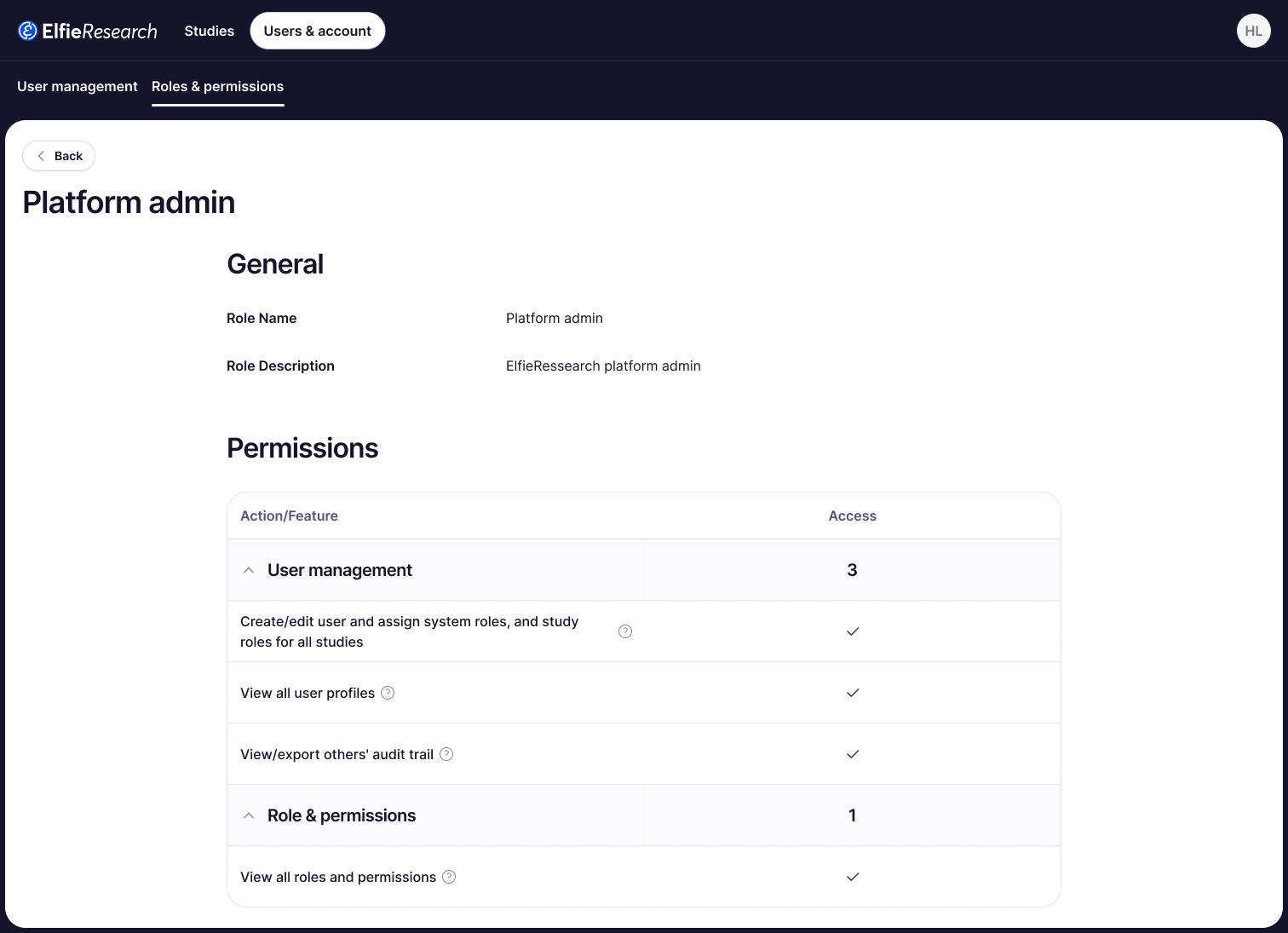
One console, six roles — not six apps.
Problem
Supporting six distinct user personas with conflicting operational needs, workflows, and access permissions within a single product.
Options
A. Separate apps per role B. A single console gated by role-based access control (RBAC)
Chose
Single console + role-based access control (RBAC).
Rationale
Unified data model: Maintains a single source of truth across the entire platform. Lower maintenance: Eliminates the overhead of building, deploying, and managing multiple distinct applications. Streamlined compliance: Ensures one consistent, centralized audit trail across every role for regulatory and security needs.
[ key decisions ][ retention ]
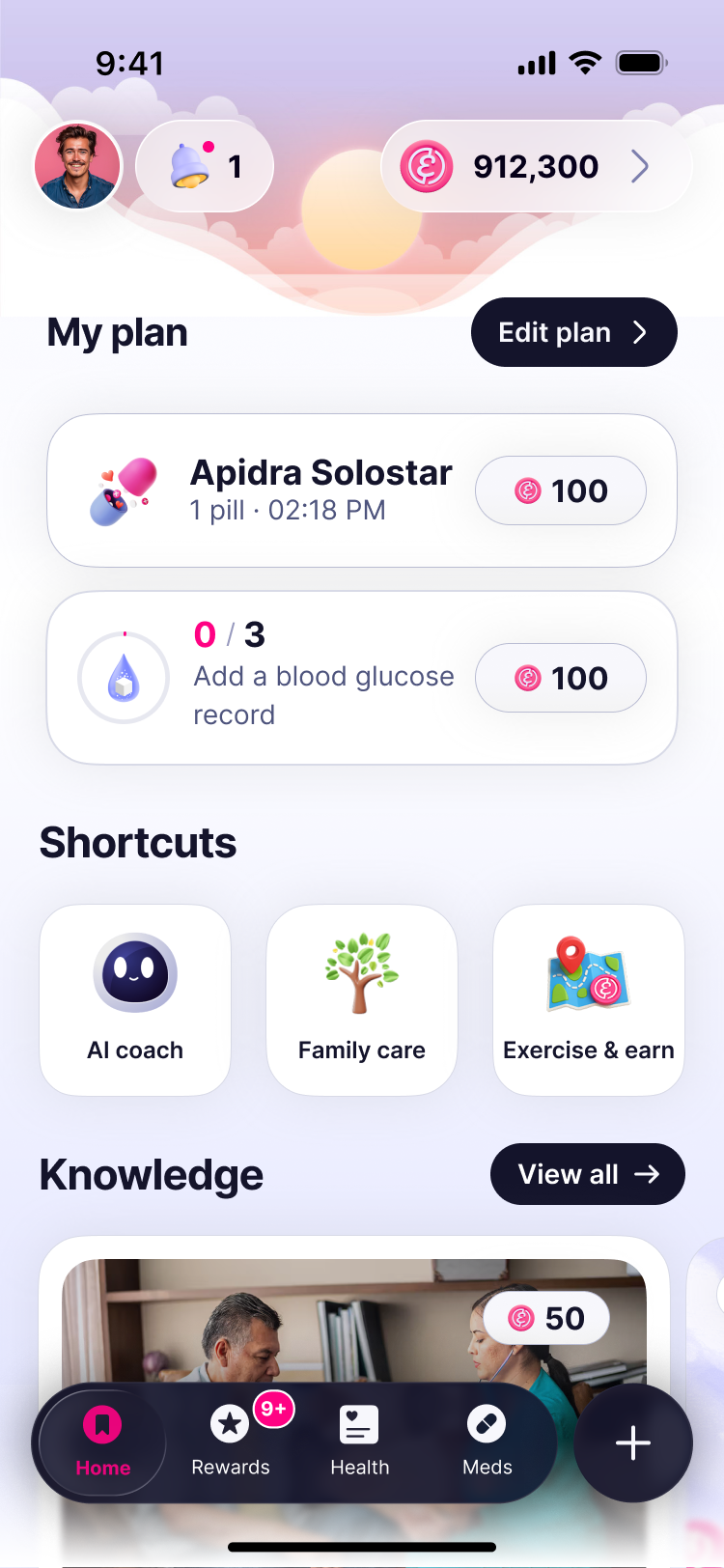
Engagement layer as the retention mechanism.
Problem
Remote trial participants experience isolation and drop out at significantly higher rates compared to site-based participants.
Chose
A gamified engagement layer in the app, customizable per treatment arm.
Rationale
Retention is the KPI that makes or breaks a trial's statistical validity, so engagement isn't a nice-to-have — it's the core function of the participant app.
Target
Achieve a 90% participant retention rate.
[ gallery ]
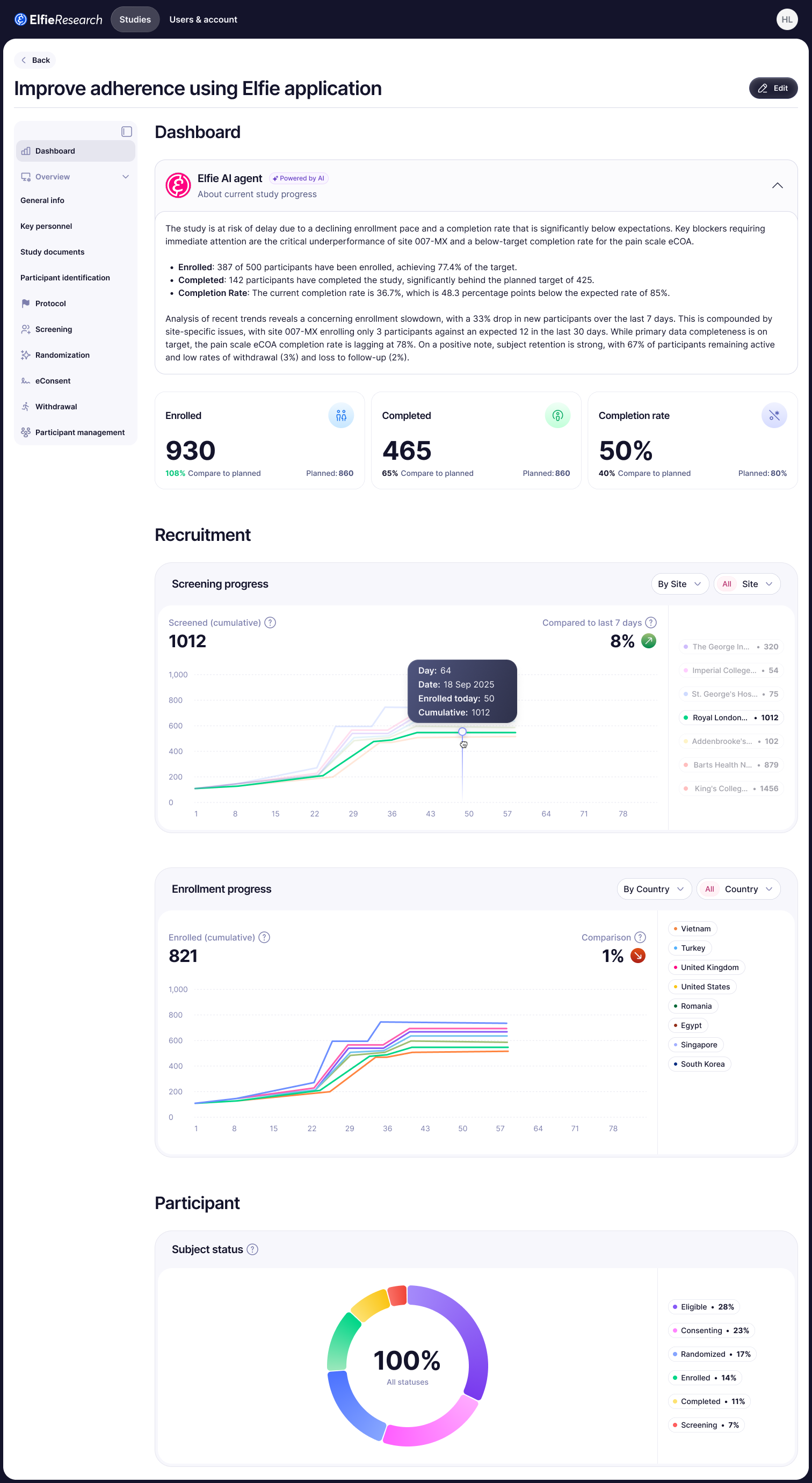
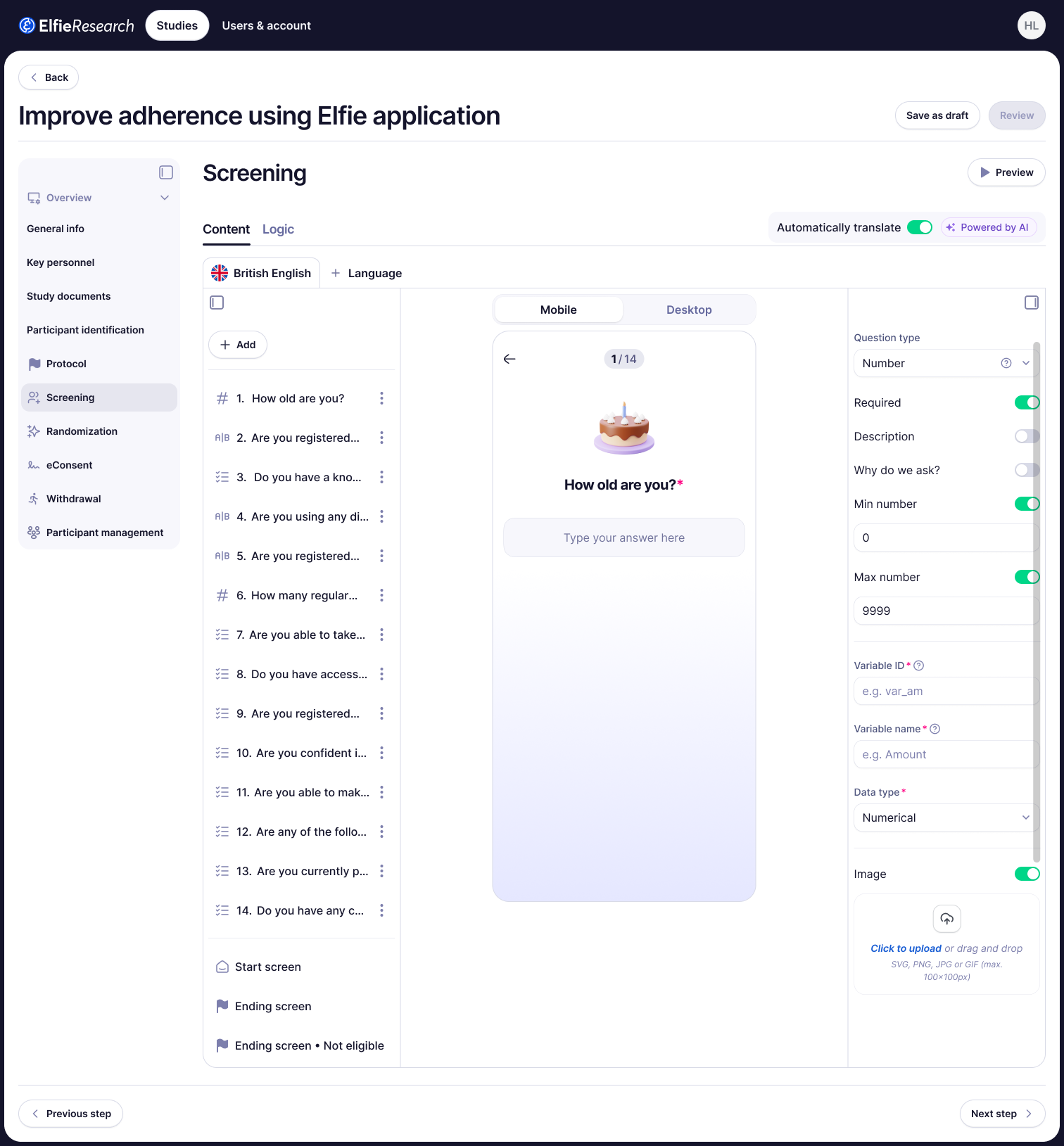
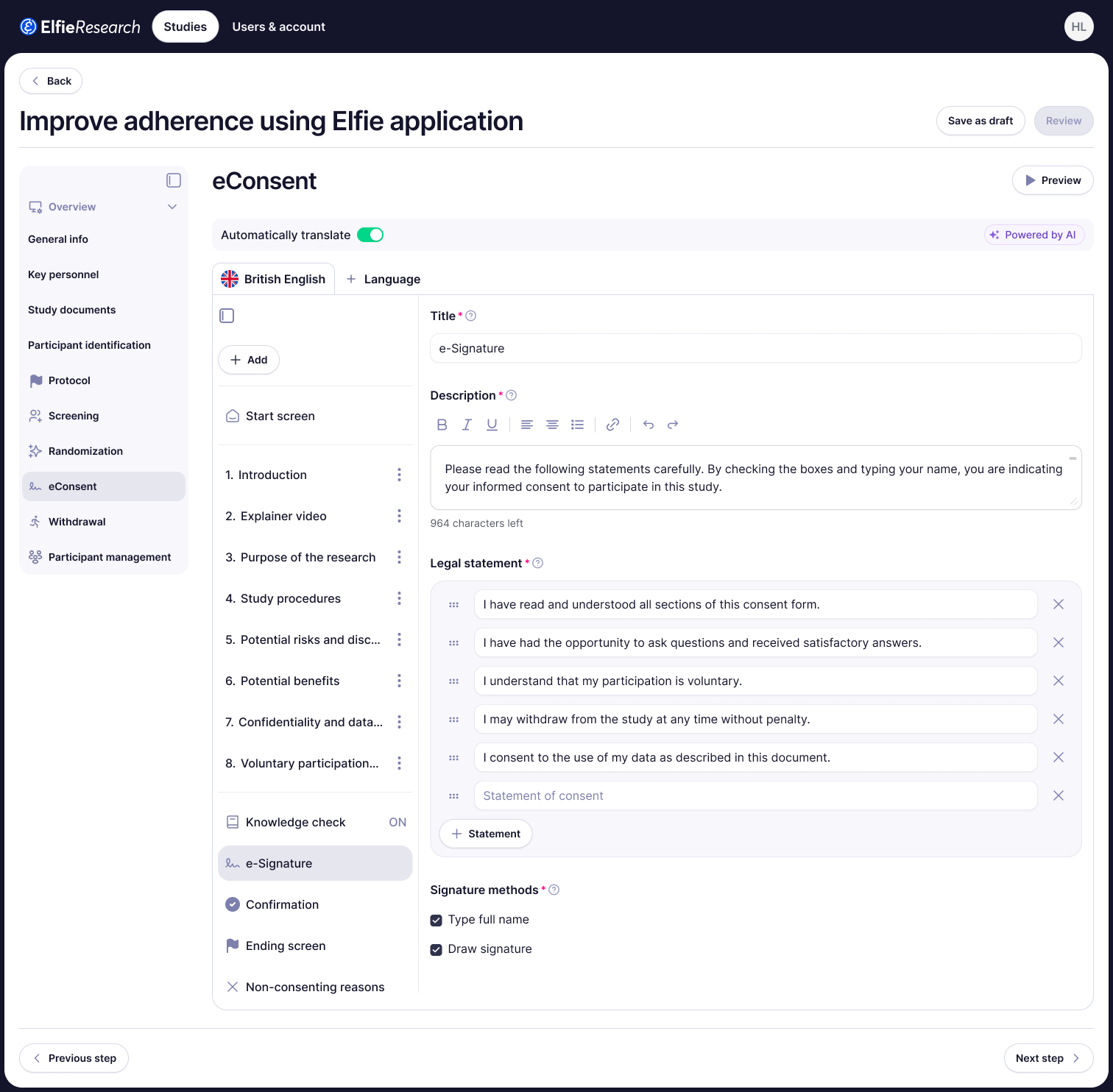
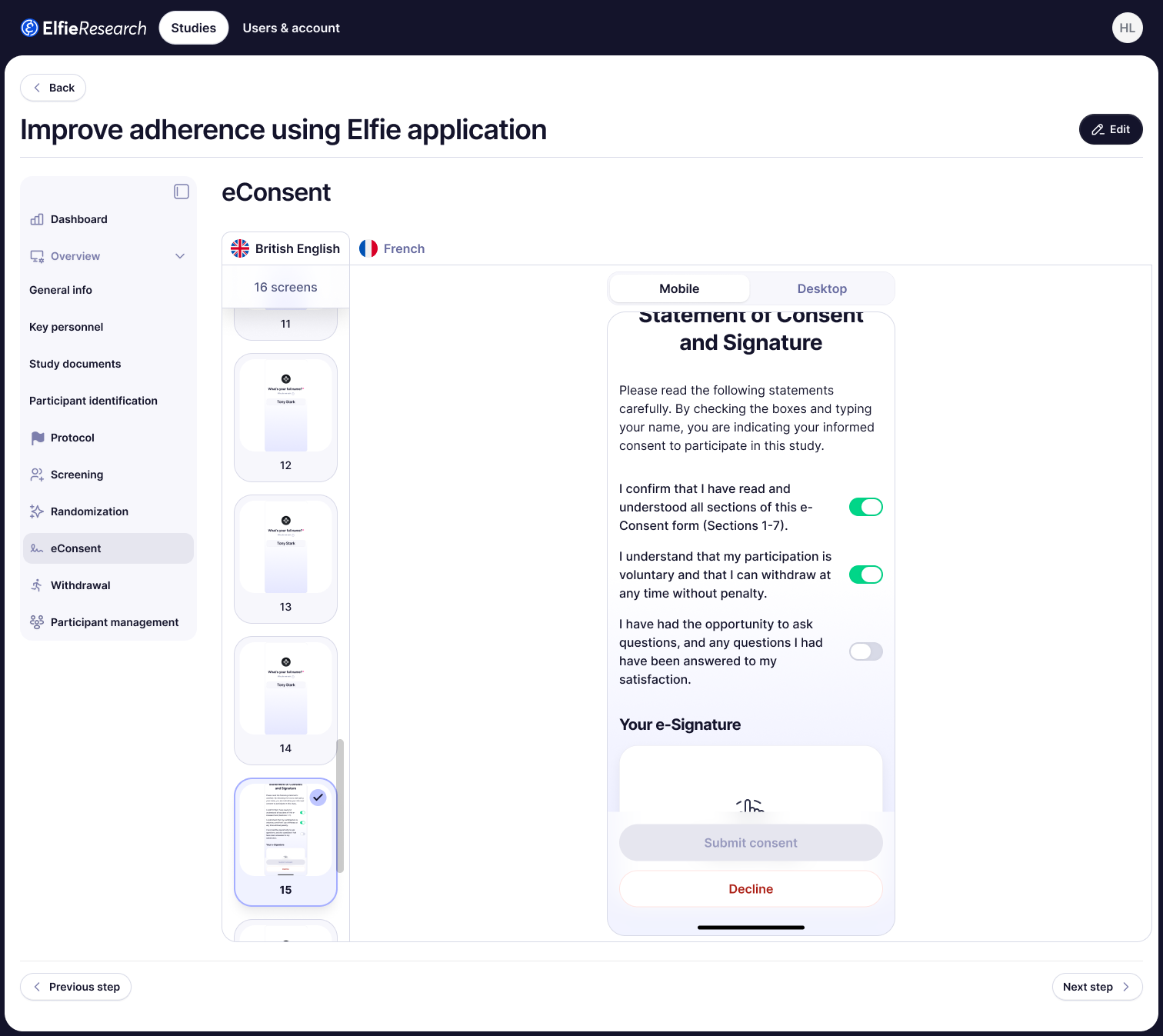
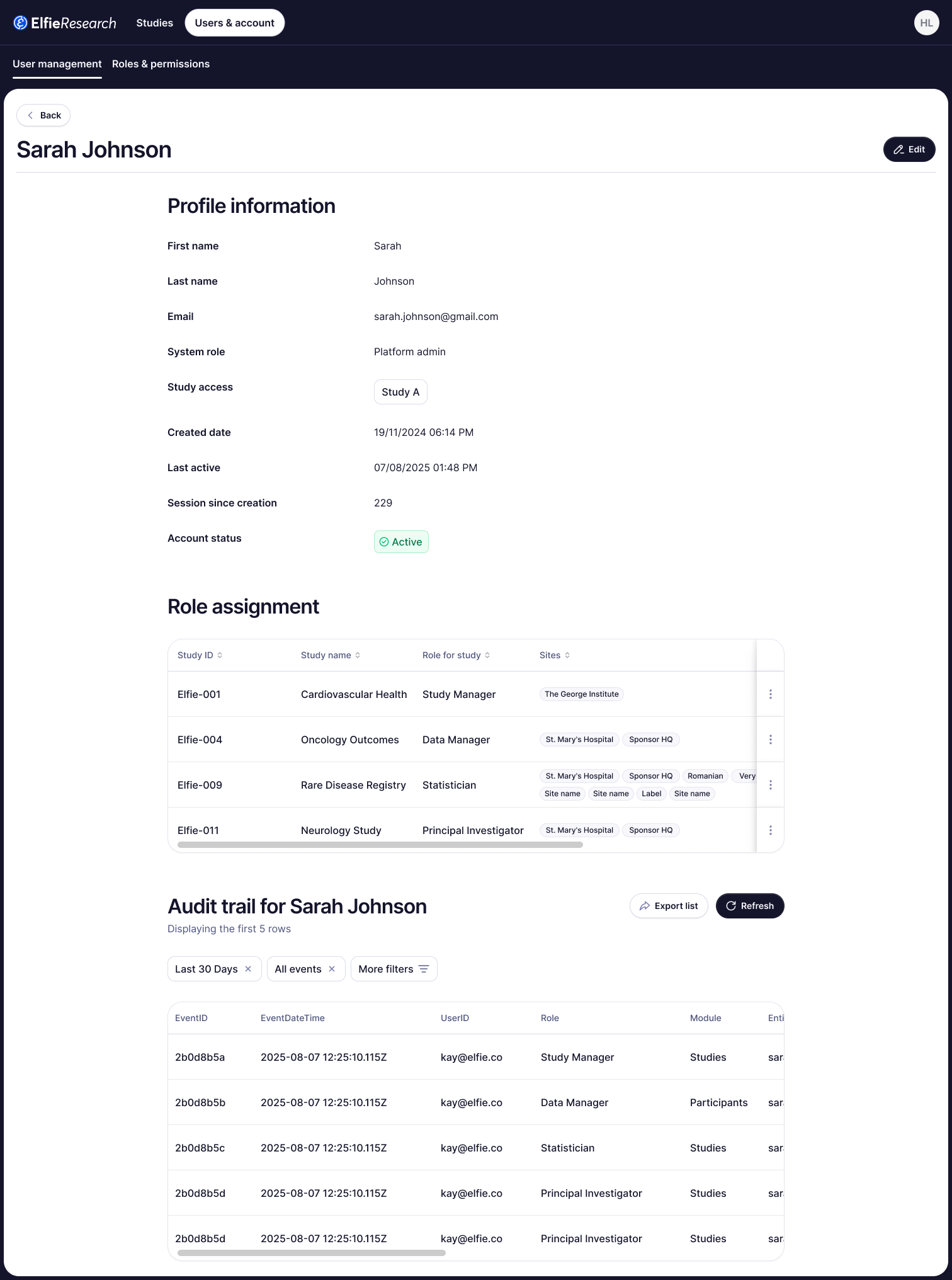
Selected final screens
Disclaimer: To comply with NDA restrictions, only selected screens are shown here.

[ outcome & impact ]
Positioning eConsent as a critical retention lever did more than improve the user experience — it anchored our design strategy directly to business KPIs, ensuring design and product were finally speaking the same language.
- Result — scope
-
6 personas
Served by one system, one audit trail.
- Target
-
90% eConsent
Consent-completion target agreed with clinical stakeholders.
- Target
-
90% retention
Participant-retention target agreed with PM and clinical.
- Target
-
−30% FPI
Faster Time to First-Patient-In compared to legacy solutions.
Targets were set with clinical and PM stakeholders; the platform was in build at the time of writing. These are our goals, not shipped results.
[ selected works ]
-
Decentralized clinical-trial platform — six personas, one regulated surface under 21 CFR Part 11 & HIPAA.
[ you are here ]

-
White-label health platform for insurers — one design system, six roles, five states, many tenants.
[ read more about ElfieProtect
-
AI photo-monitoring for chronic venous disease — built around real clinical mental models.
[ read more about VeinHealth
-
A white-glove digital-asset platform for HNWIs & institutions — four interlocking surfaces that route into human service, not around it.
[ read more about Coinhako Privé
-
From info screen to trading hub — the most-viewed screen in the app, rebuilt as a single-scroll IA across six surfaces in twelve weeks.
6 surfaces · 4 reusable patterns · shipped on deadline.
[ read more about Coin Detail page
-
Replacing a legacy school CRM without retraining the people who ran it — six modules and a tokenised design system in three months.
[ read more about Zenith School CRM